
 English
 عربى
 Español

This American-style trolley-mounted charcoal grill is designed for garden and patio barbecue enthusi...

From Factory Carton to Store Shelf: Protecting a Foldable Grill Finish
Author: Admin
Date: Oct 30,2026
A foldable grill is usually photographed standing upright, with its cooking surface visible and its side trays neatly arranged. The delivery journey looks different. Folded legs, removable grates and loose hardware can share a carton with finished metal surfaces. The packing review needs to examine those contacts before a retailer opens the first shipment.
For outdoor-product importers, this is a chance to connect the factory packing arrangement with the customer's first impression. A carton that contains every part can still leave avoidable marks or make assembly confusing. The review should look at protection, identification and the order in which components are unpacked.
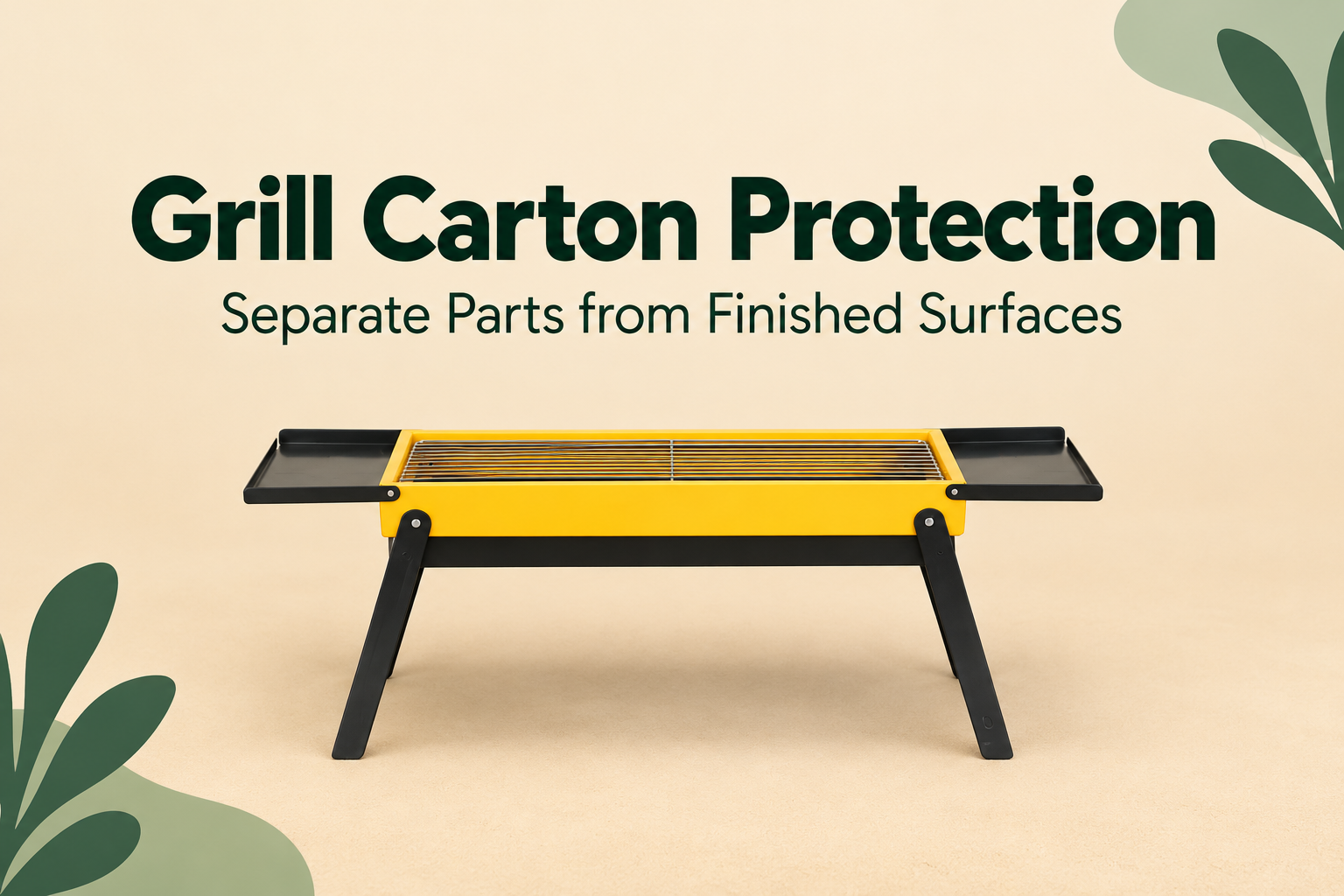
Open the carton in the order a retailer will
Use a representative packing sample for the exact retail model. The foldable charcoal grill collection includes products that should be checked individually; similar colours or folding legs do not establish a common packing arrangement. Record the model, supplied parts and packaging revision before starting.
Photograph the carton as received, then each layer as it is removed. Note which component the recipient encounters first and whether lifting it disturbs other parts. This sequence can reveal a contact point that is hidden in a photograph of the finished inner packing.
Keep the review focused on the actual delivered configuration. A sample packed carefully by hand for a meeting may not describe the agreed production arrangement. Ask the supplier to identify which materials and placements will be used for repeat shipments.
Trace the places where parts could rub
Look at the folded legs, side-tray edges, cooking grate and any loose hardware. Identify whether they are restrained and separated from the finished body. A small bag of fasteners can become a contact source if it moves freely against a painted panel during handling.
Do not assume that more wrapping is always the answer. Protection must remain in the correct position and allow components to be unpacked without force. Ask how dividers, sleeves or other materials are located and whether their placement depends on the packing operator remembering an informal instruction.
The supplier should review the suitability of materials that touch the finish. Films, adhesives and abrasive surfaces may behave differently on different treatments. Obtain the relevant removal or handling instructions rather than applying a protective material simply because it is familiar from another product.
Treat the grate as a separate packing decision
A cooking grate may have projecting edges or handles that need consideration in the layout. Its protection and identification should suit the actual model. Do not substitute a generic grate image in the instruction sheet if the delivered part has a different shape or support arrangement.
Where any material contacts a cooking surface, ask the supplier to confirm that the proposed arrangement is appropriate for the product and its supplied cleaning instructions. Packaging approval is not a substitute for the required material or product documentation.
Use a contact map instead of a vague packing note
| Contact area | What to inspect in the sample | Record for repeat packing |
|---|---|---|
| Body and folded legs | Movement or direct metal contact | Restraint and separation positions |
| Side trays | Edges against finished panels | Divider placement or protected orientation |
| Cooking grate | Projecting edges and neighbouring components | Its designated location and protection |
| Hardware pack | Freedom to move inside the carton | Fixed location and clear part identification |
| Outer corners | Relationship between product and carton edges | Agreed inner support arrangement |
| Printed instructions | Accessibility during unpacking | Document version and placement |
A barbecue grill packing layout should be understandable from the record. If the photograph is unclear, add a simple labelled sketch identifying the parts and protection. Avoid a note such as pack well, which gives neither the factory nor the buyer a repeatable reference.
Review presentation without claiming a test result
After unpacking, compare the finish with the agreed appearance reference under a consistent viewing method. Record any mark by location and preserve the associated packing. This helps distinguish a contact pattern from an unexplained statement that the grill arrived scratched.
If transport verification is required, agree the relevant method and acceptance criteria with the supplier or packaging specialist. The result must be tied to the actual packed configuration. A packing review at a desk is useful, but it should not be described as a completed shipping test.
Keep documentation for changes. If a divider, carton or packing quantity is revised, ask whether the previous evidence still applies. A small material substitution can change how components move, so the supplier should review its effect on the approved layout.
Make receiving inspection useful to the supplier
When grill finish transit damage is reported, capture both the product and its packaging context. Include carton condition, label, inner position, affected surface and quantity checked. A clear record helps the supplier investigate a specific arrangement rather than infer the cause from a single compressed photograph.
Separate transit concerns from assembly observations. A missing fastener, an unclear instruction and a finish mark may require different corrective actions. Combining them into one general quality complaint makes it harder to decide which part of the delivery specification needs attention.
This article concerns unused goods and packing review. For use, retain the manufacturer's safety instructions. A compact folding design does not make them suitable for enclosed spaces.
- Review a representative sample for the precise retail model.
- Photograph the unpacking sequence and component contacts.
- Keep loose hardware away from vulnerable finished surfaces.
- Agree protection materials and their placement.
- Retain any required verification with its packing revision.
- Give receiving staff a clear method for documenting concerns.
Foldable grill carton protection works best when the supplier and buyer review the same physical arrangement. Send the intended retail pack contents and distribution route with the enquiry so protection and presentation can be considered together.
Contact Us Now
Related products
-
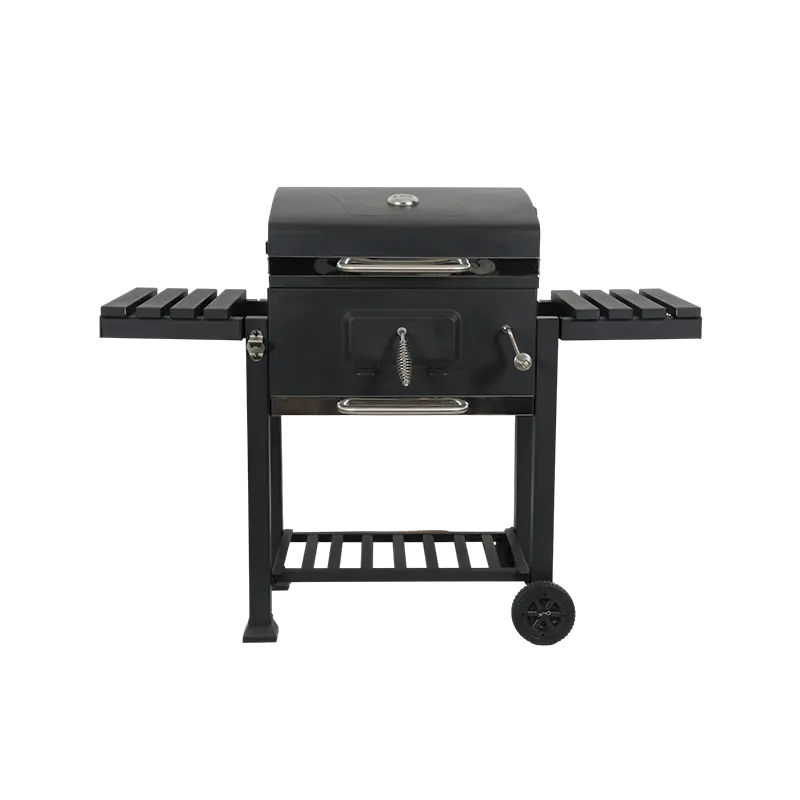 Garden Patio American Style Trolley Charcoal Smoker Grill Square Furnace
-
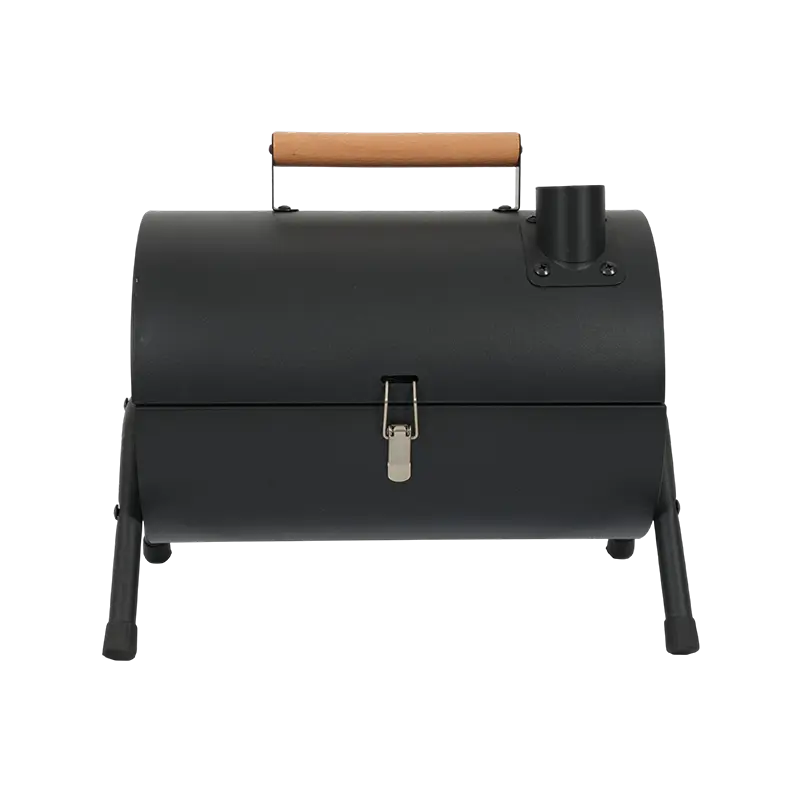 Tabletop Portable Double Sided Charcoal BBQ Grill Roaster
This compact and portable charcoal grill is designed for outdoor barbecue enthusiasts, easily handli...
-
 Multifunctional Campfire Tea Cooking Outdoor Portable Charcoal Grill
Scene Adaptability: Designed for outdoor enthusiasts, suitable for camping, picnics, caravan parties...
-
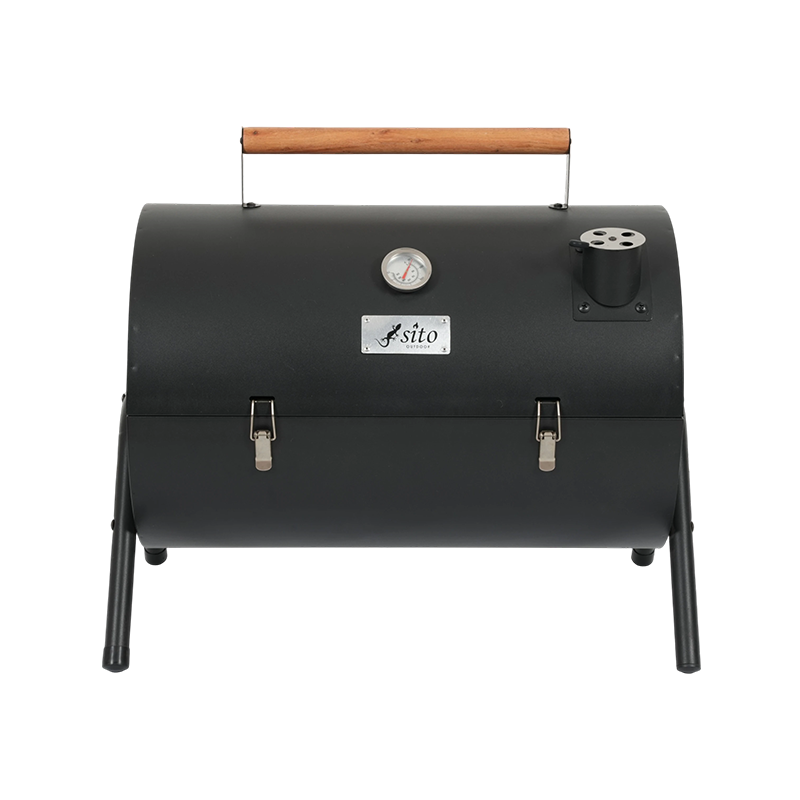 Wooden Handle Portable Tabletop Charcoal Roaster Grill
This portable grill is designed for outdoor barbecue enthusiasts and is perfect for camping trips, p...
-
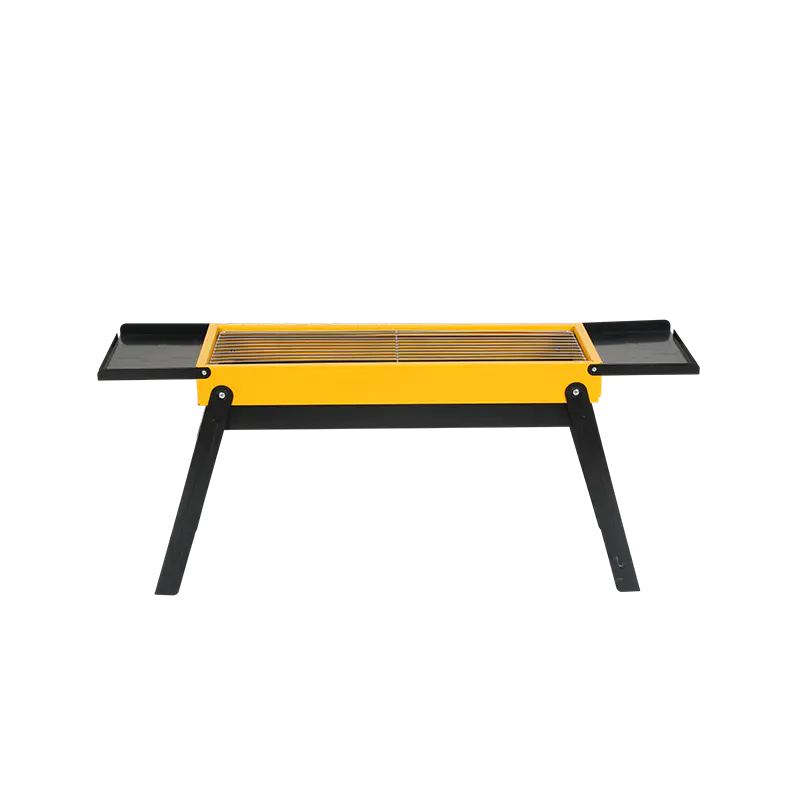 Portable Folding Outdoor Camping Charcoal Barbecue Grill
This portable, foldable outdoor camping charcoal grill is compact yet powerful, making it a great ch...
-
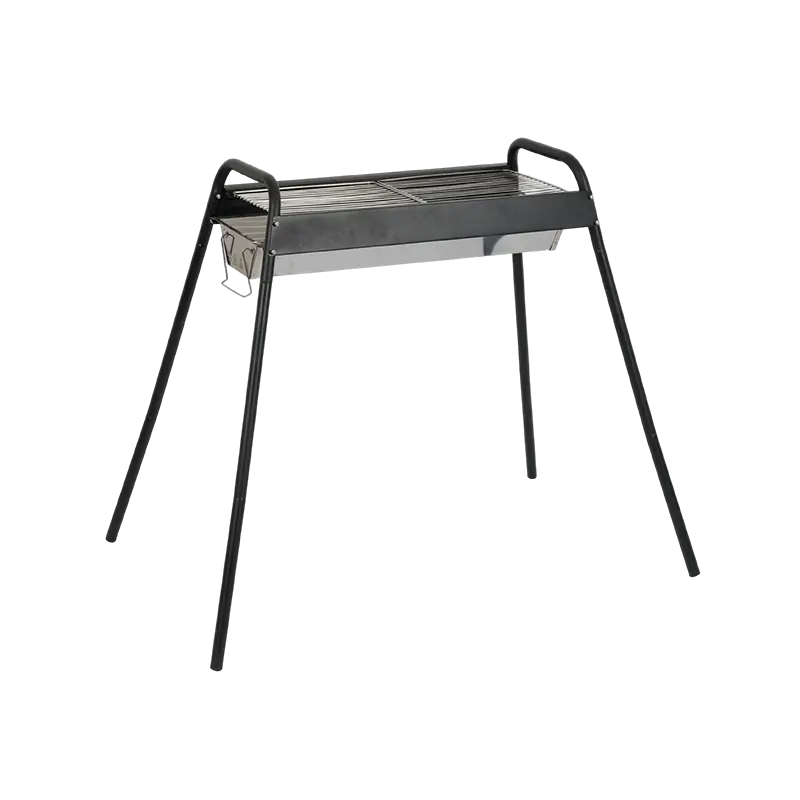 Outdoor Garden Portable Folding Charcoal Barbecue Grill
This portable, folding charcoal grill, designed specifically for outdoor BBQ enthusiasts, is perfect...

We are committed to integrity and quality, and we serve our customers with our professional oven manufacturing knowledge.
Phone: +86-13735628111
E-mail: [email protected]
Add: No.17 Ying Bin Road, Qing Xi Industry Zone, Xiang Zhu Town, Yongkang city,Zhenjiang province, China
Copyright © Yongkang Tongde Industry & Trade Co., Ltd. Rights
Reserved.

Outdoor BBQ Grill Manufacturer