
 English
 عربى
 Español

This American-style trolley-mounted charcoal grill is designed for garden and patio barbecue enthusi...

Charcoal Grill Replacement Grates: Record the Complete Fit Specification
Author: Admin
Date: Oct 23,2026
A replacement cooking grate may have the right overall width yet sit incorrectly on the grill. Corners, support tabs, rim depth and the position of a handle can all affect fit. For importers and distributors, charcoal grill replacement grates should be ordered against a complete interface record rather than a single measurement.
The purpose of that record is practical: connect each spare part to the grill models it is intended to serve. It helps purchasing teams compare quotations and helps service staff identify the correct item after packaging or product names have changed. Compatibility should be confirmed by the manufacturer for the actual model and revision.
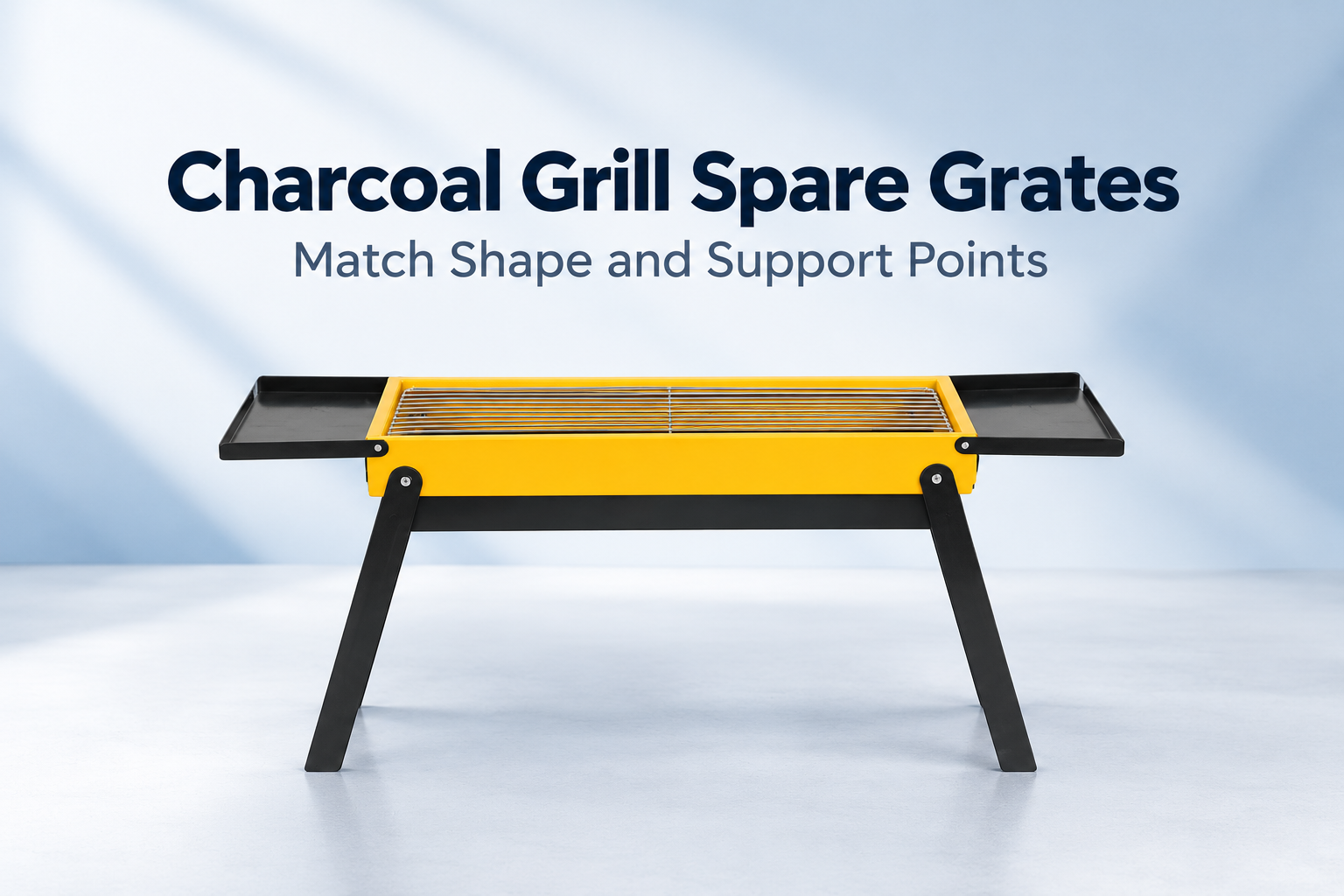
Identify the original grill and grate
Start with the grill model, order reference and any production revision. Include photographs of the complete grill and the grate in its normal installed position. An isolated mesh panel can be difficult to identify when several models use similar rectangular shapes.
When reviewing the foldable charcoal grill range, ask which grate reference belongs to the selected grill. A common product family does not establish that every cooking surface is interchangeable. Keep the supplier's confirmed spare-part reference alongside the retail model name.
Record whether the replacement is the cooking grate or a separate charcoal support. These parts serve different functions and may use different construction. A service request that says only grill mesh can cause the wrong item to be quoted even when the photograph appears understandable.
Measure the outline and the seating arrangement
A grill grate fit specification should include its full outline, relevant corner shape and the depth or height of the perimeter frame. Show the measurement points on a simple drawing. State the units and identify whether dimensions refer to the outside frame or the clear mesh area.
Next, record how the grate rests in the grill. It may sit on ledges, engage tabs or use another support arrangement. Show those features with the grate removed and include the dimensions needed to locate them. The support interface is often more informative than the overall grill body size.
Ask the supplier which clearances are necessary for installation and removal. Do not specify a tight fit from an improvised measurement or alter the grate to make it sit in place. The manufacturer should review the intended relationship between the grate and its supports.
Check handles and nearby components
Handles, lifting points and projecting wire ends can affect how a grate is fitted and removed. Include their position and the space around them. Check whether a lid, side shelf or folding mechanism changes the available access when the grill is assembled.
For a grill with more than one cooking position, identify every intended support level. A replacement that rests correctly in one position may not suit another. Confirm the permitted arrangement against the model instructions rather than assuming the user can choose any available ledge.
Photograph the grate seated from above and from the side. These views help explain an interference that a top-view outline misses. Keep the photographs linked to the measured sample so that a later drawing revision does not become detached from its visual reference.
Compare replacement parts on a consistent basis
| Fit item | Information for the enquiry | Problem it helps prevent |
|---|---|---|
| Model identity | Grill reference and production revision | Ordering a similar but unrelated part |
| Outer outline | Length, width and corner profile | Interference with the body opening |
| Support interface | Ledges, tabs and seating locations | Unstable or incomplete seating |
| Frame depth | Perimeter profile and relevant height | A grate resting at the wrong level |
| Handling features | Handle or lifting-point position | Conflict with nearby components |
| Part construction | Specified material and surface treatment | Unapproved substitution in repeat supply |
Use the same information when comparing suppliers or replacement revisions. An attractive quotation based on a different material or frame construction is not directly comparable. Any proposed substitution should be reviewed and approved before the order is placed.
Keep material information separate from appearance
Request the material and finish description for the offered grate. A bright metallic photograph cannot establish the alloy or coating. If food-contact documentation is required for the target market, specify the evidence needed for the actual supplied component and its intended use.
Avoid adding unsupported claims about rust resistance, service life or universal compatibility to a replacement listing. Publish the confirmed model coverage and care instructions instead. A clear fit statement is more useful to a customer than a broad claim that may not apply to their grill.
Keep cleaning advice specific to the supplied construction. Abrasive methods or chemical treatments suitable for one surface may be unsuitable for another. Obtain the manufacturer's instructions rather than copying generic advice from a different type of grate.
Validate the spare part before opening repeat orders
Review a representative replacement on the intended grill in accordance with the manufacturer's procedure. Check correct seating, required clearance and access for removal when the equipment is cold. Record the sample reference and any unresolved differences before approving production quantities.
Make replacement grate model identification visible on packaging and in the service catalogue. Keep different sizes separated in warehouse stock and retain the confirmed fit record for later replenishment. If the original grill is revised, review whether the spare-part reference also needs to change.
Prepare a complete spare-grate request
- Provide the grill model, revision and original order reference.
- Include installed and removed photographs of the cooking grate.
- Show the outline, support locations and handling features.
- Specify the required material and documentation.
- Approve a representative sample against the intended grill.
- Label the spare with its confirmed model coverage.
Send this information with the enquiry so the manufacturer can assess the actual interface. A complete fit record supports repeat purchasing and gives service staff a clearer route from the customer's grill to the correct replacement part.
Contact Us Now
Related products
-
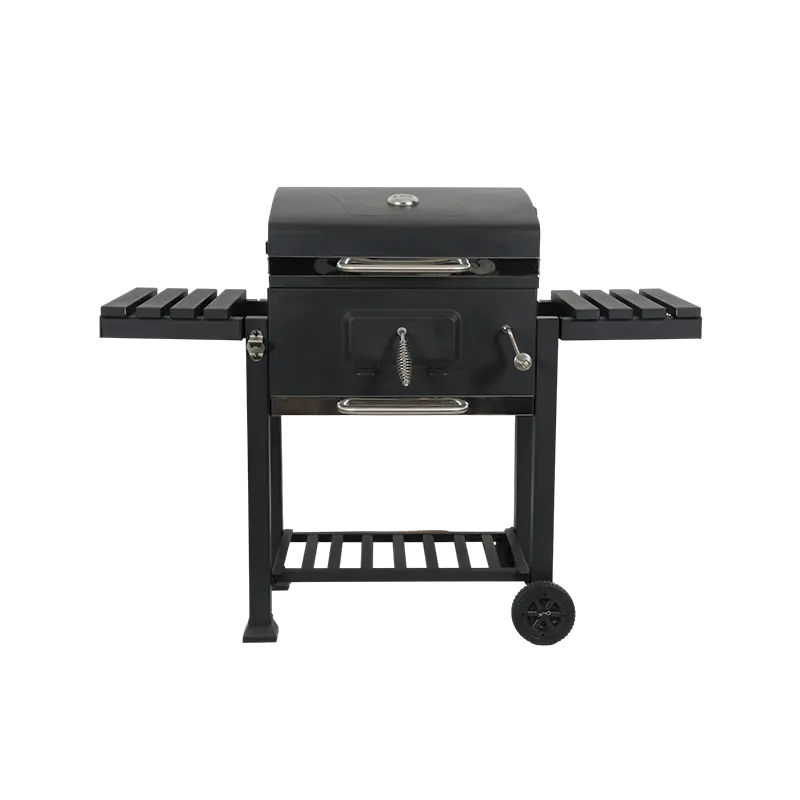 Garden Patio American Style Trolley Charcoal Smoker Grill Square Furnace
-
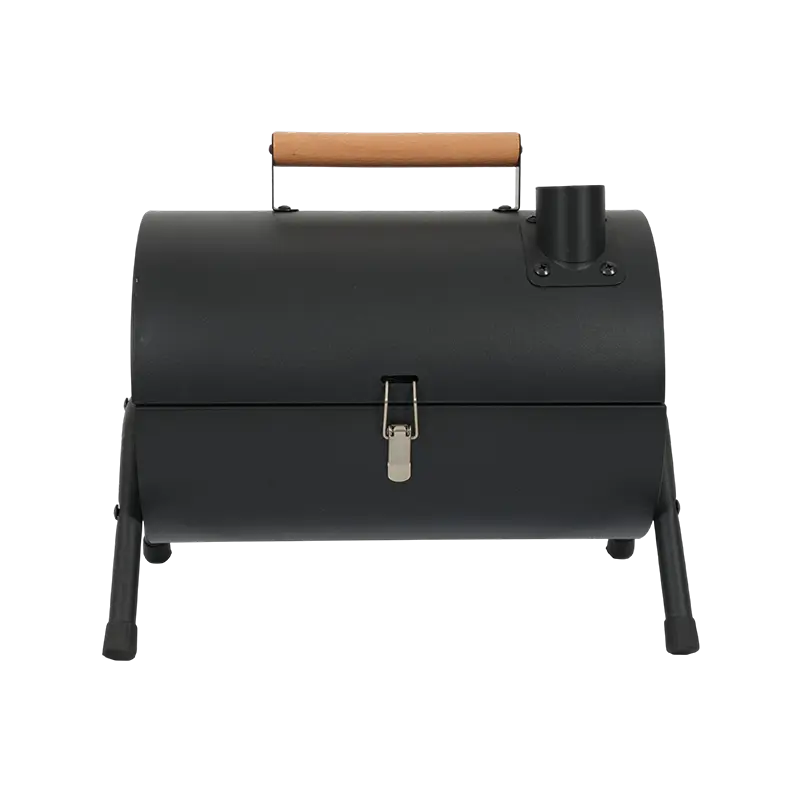 Tabletop Portable Double Sided Charcoal BBQ Grill Roaster
This compact and portable charcoal grill is designed for outdoor barbecue enthusiasts, easily handli...
-
 Multifunctional Campfire Tea Cooking Outdoor Portable Charcoal Grill
Scene Adaptability: Designed for outdoor enthusiasts, suitable for camping, picnics, caravan parties...
-
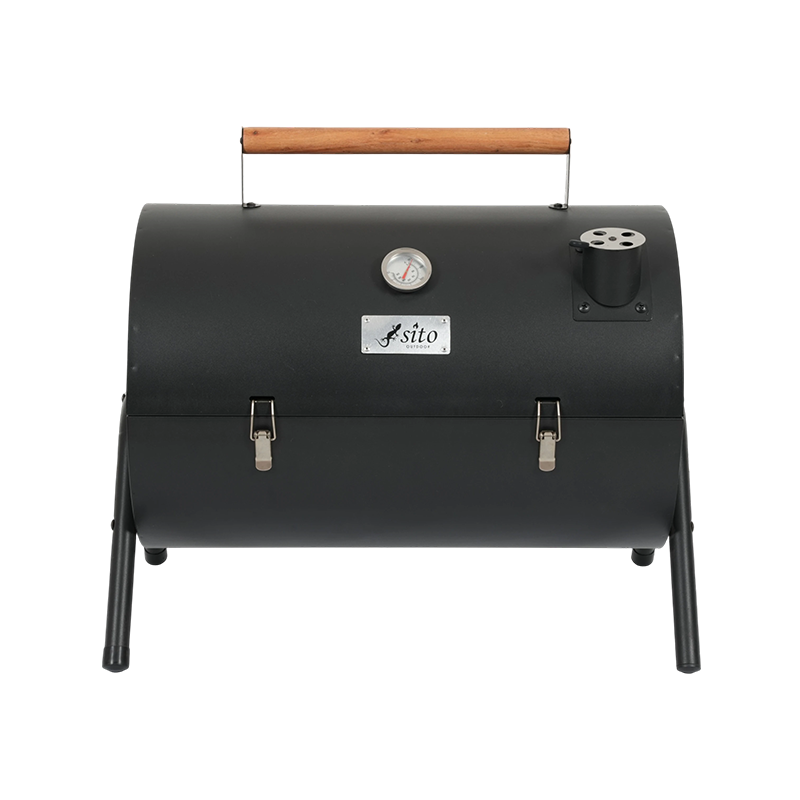 Wooden Handle Portable Tabletop Charcoal Roaster Grill
This portable grill is designed for outdoor barbecue enthusiasts and is perfect for camping trips, p...
-
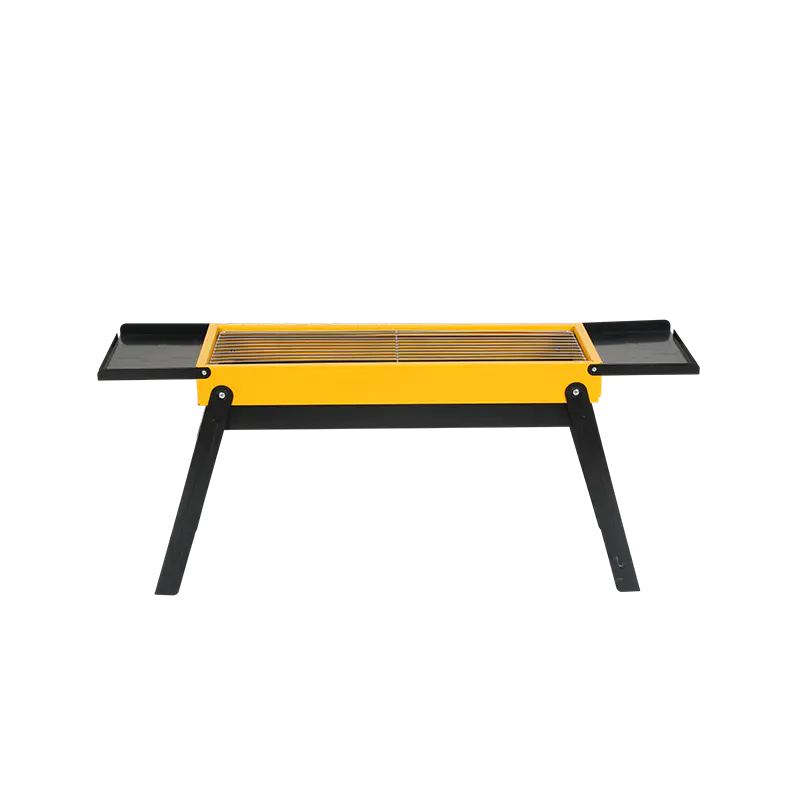 Portable Folding Outdoor Camping Charcoal Barbecue Grill
This portable, foldable outdoor camping charcoal grill is compact yet powerful, making it a great ch...
-
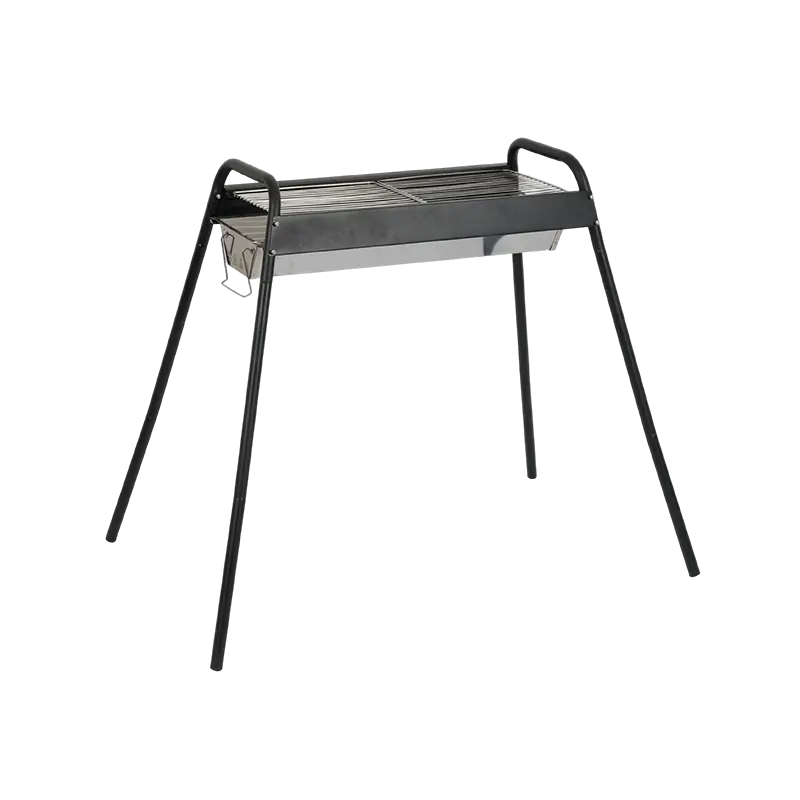 Outdoor Garden Portable Folding Charcoal Barbecue Grill
This portable, folding charcoal grill, designed specifically for outdoor BBQ enthusiasts, is perfect...

We are committed to integrity and quality, and we serve our customers with our professional oven manufacturing knowledge.
Phone: +86-13735628111
E-mail: [email protected]
Add: No.17 Ying Bin Road, Qing Xi Industry Zone, Xiang Zhu Town, Yongkang city,Zhenjiang province, China
Copyright © Yongkang Tongde Industry & Trade Co., Ltd. Rights
Reserved.

Outdoor BBQ Grill Manufacturer