
 English
 عربى
 Español

This American-style trolley-mounted charcoal grill is designed for garden and patio barbecue enthusi...

Trolley Charcoal Grill Assembly: Check the Sample Before Dispatch
Author: Admin
Date: Nov 20,2026
The first assembled grill is a useful purchasing tool. It shows whether the hardware pack, instructions and metal components work together as a product that a distributor can actually deliver. A photograph of a completed grill cannot reveal a missing fastener, an awkward assembly sequence or an instruction drawing that points to the wrong hole.
Tongde’s trolley charcoal smoker grill provides a specific example for this review. The listing shows a covered cooking body, handles, a trolley base, wheels and a side work area. It also describes wing-screw assembly. The relevant procurement question is how the supplied parts and instructions reproduce the approved configuration.
Open one carton as the customer would
Keep an unopened sample carton for the assembly review. Record its product revision and packing list before spreading out the components. Work from the actual supplied instructions rather than relying on an experienced technician who already knows the product.
Photograph the parts before assembly and match them to the list. Similar-looking screws can have different lengths or thread requirements. Ask for clear identification where the assembly depends on choosing the correct fastener. A single undivided bag can be convenient to pack but difficult for the user to interpret.
Record which tools are supplied and which the customer must provide. A claim of simple assembly should not conceal an unexpected tool requirement. If a manual needs revision, correct the master document and the printed sample together so the change reaches production cartons.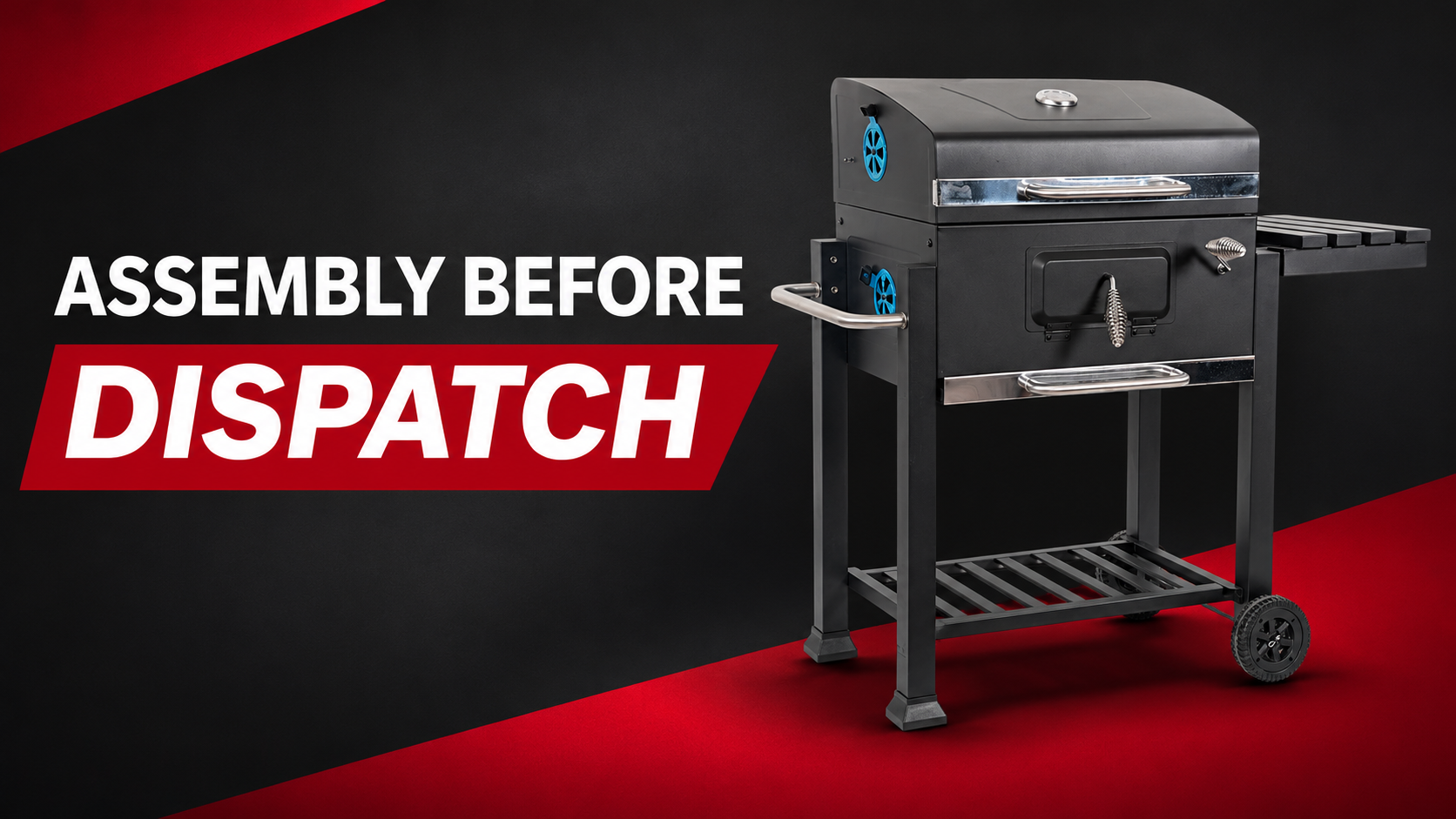
Build from the base upward
Check the trolley frame before mounting the cooking body. The base should be assembled in the intended orientation, with the wheels, feet and lower support arranged as shown in the approved drawing. Do not force misaligned parts together to make the sample appear complete.
Continue with the body, handles, side components and internal parts in the specified sequence. Pay attention to whether an early fastener blocks later access. A sensible instruction may require some joints to remain loose until the adjoining parts are positioned; any such sequence should be stated clearly.
Use the specified fasteners and tightening guidance. Do not invent torque values from the screw size or substitute a power tool because it is faster. The supplied joint design, materials and supplier instructions determine the appropriate assembly procedure.
What deserves a recorded observation?
| Assembly point | Observation to retain |
|---|---|
| Wheel installation | Retaining parts, free movement and arrangement |
| Handles | Mounting direction, access and secure attachment |
| Lid and body | Alignment and movement after assembly |
| Side components | Correct position and unobstructed attachment |
| Hardware pack | Part identity, quantity and correspondence to instructions |
Separate an assembly problem from a cosmetic issue. A scratch on a coated panel and a joint that cannot be aligned require different corrective actions. Keep photographs linked to component names so the supplier can trace each observation to the drawing, packing method or instruction step.
Check the thermometer and any other listed accessory against the actual order. The product page is a reference, while the purchase specification determines the supplied configuration. If different sizes or options are offered, avoid mixing their photographs, manuals and hardware lists.
Turn the trial into packing instructions
After assembly, identify surfaces that touched or rubbed while the parts were in the carton. Protective material should be reviewed around edges and projecting parts as well as large visible panels. Do not assume that a thicker outer carton alone prevents internal abrasion.
Confirm how small components are secured. A loose bag of hardware can move within a carton and damage a surface or become difficult to locate. The packing drawing should show its intended position, identification and any separation from coated components.
- Match the assembled configuration to the order drawing.
- Resolve hardware and instruction discrepancies.
- Update the bill of materials and packing arrangement.
- Repack a representative sample using the revised method.
- Retain the approved documents and sample photographs.
Give instruction changes a clear owner
Decide who approves translations, diagrams and accessory descriptions for the destination market. A hardware change can require a manual update even when the finished grill looks the same. The supplier and distributor should know which document controls the supplied kit.
If several carton versions are used, label them clearly during the sample review. A retail carton, a spare-parts package and a replacement component set may need different contents. Do not let one generic packing list stand in for all three.
At the final review, have someone unfamiliar with the previous sample follow the revised instructions. Record any point where they must guess which part to use. That observation can reveal a documentation gap without turning the assembly trial into an unsupported claim about every customer’s experience.
Keep cold assembly and operating approval separate
A cold assembly trial checks whether the product can be built correctly from the supplied components. It does not establish cooking performance, coating life or compliance with a market requirement. Those matters need their own applicable evidence and agreed evaluation.
The same distinction applies to movement. Rolling an empty sample across a workshop floor is useful for observing assembly, but it does not justify claims about moving a hot grill or using it on every surface. Follow the supplier’s operating instructions and ensure the retail guidance addresses the intended outdoor use.
Before bulk dispatch, retain one controlled reference set: product drawing, hardware list, instruction revision, carton layout and approved photographs. That set gives both Tongde and the buyer a clearer reference for future inspections. It also helps distributors distinguish a changed assembly from a missing component when responding to enquiries after delivery.
Contact Us Now
Related products
-
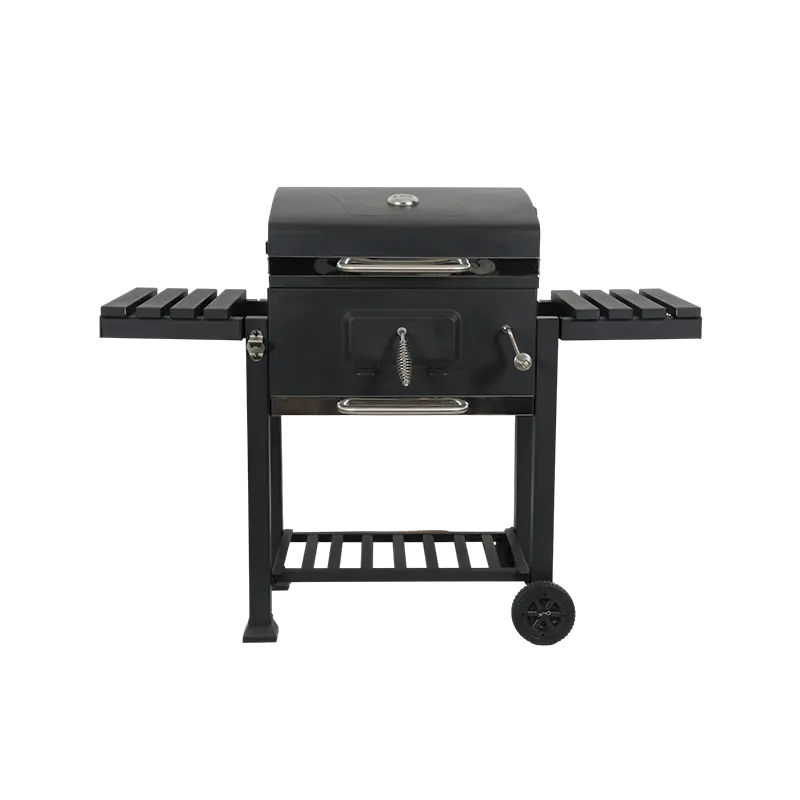 Garden Patio American Style Trolley Charcoal Smoker Grill Square Furnace
-
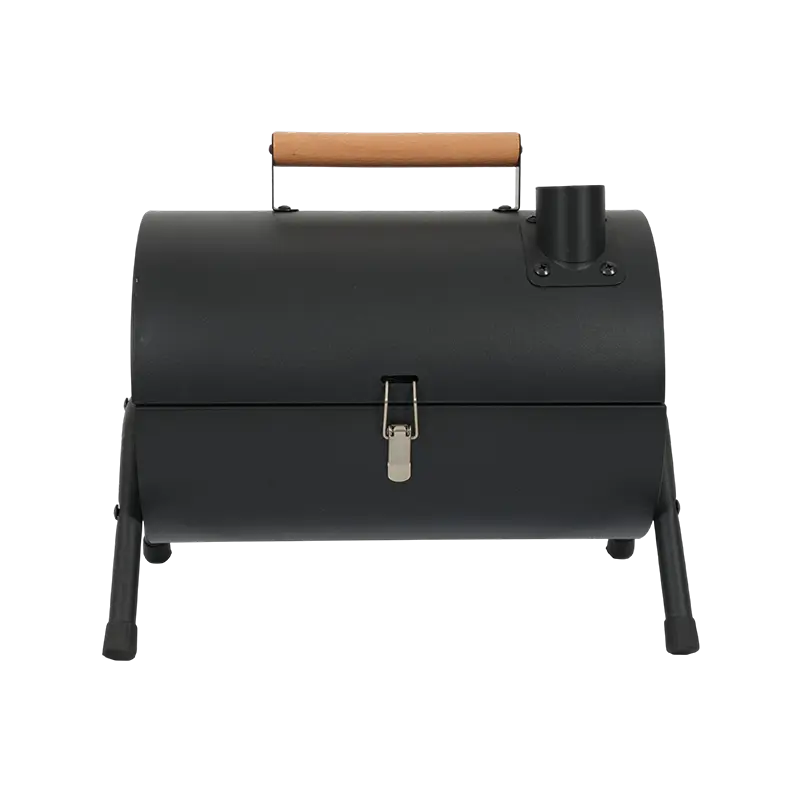 Tabletop Portable Double Sided Charcoal BBQ Grill Roaster
This compact and portable charcoal grill is designed for outdoor barbecue enthusiasts, easily handli...
-
 Multifunctional Campfire Tea Cooking Outdoor Portable Charcoal Grill
Scene Adaptability: Designed for outdoor enthusiasts, suitable for camping, picnics, caravan parties...
-
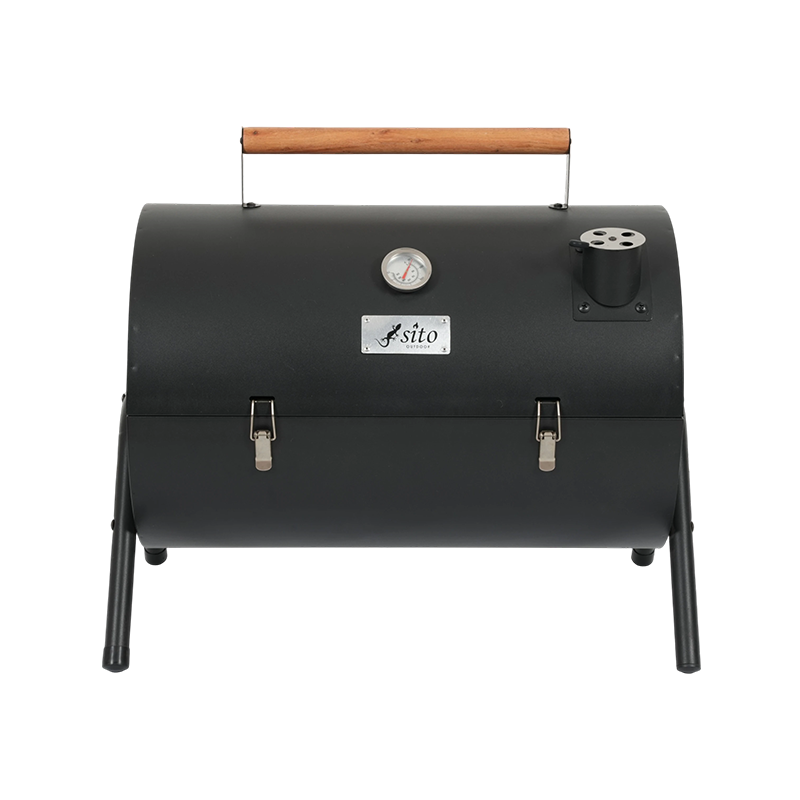 Wooden Handle Portable Tabletop Charcoal Roaster Grill
This portable grill is designed for outdoor barbecue enthusiasts and is perfect for camping trips, p...
-
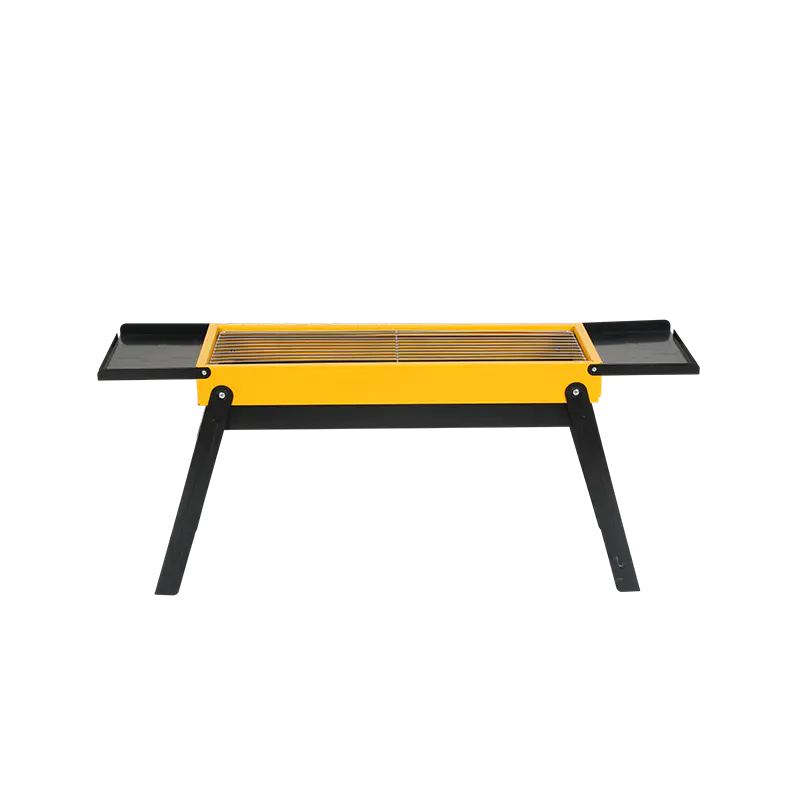 Portable Folding Outdoor Camping Charcoal Barbecue Grill
This portable, foldable outdoor camping charcoal grill is compact yet powerful, making it a great ch...
-
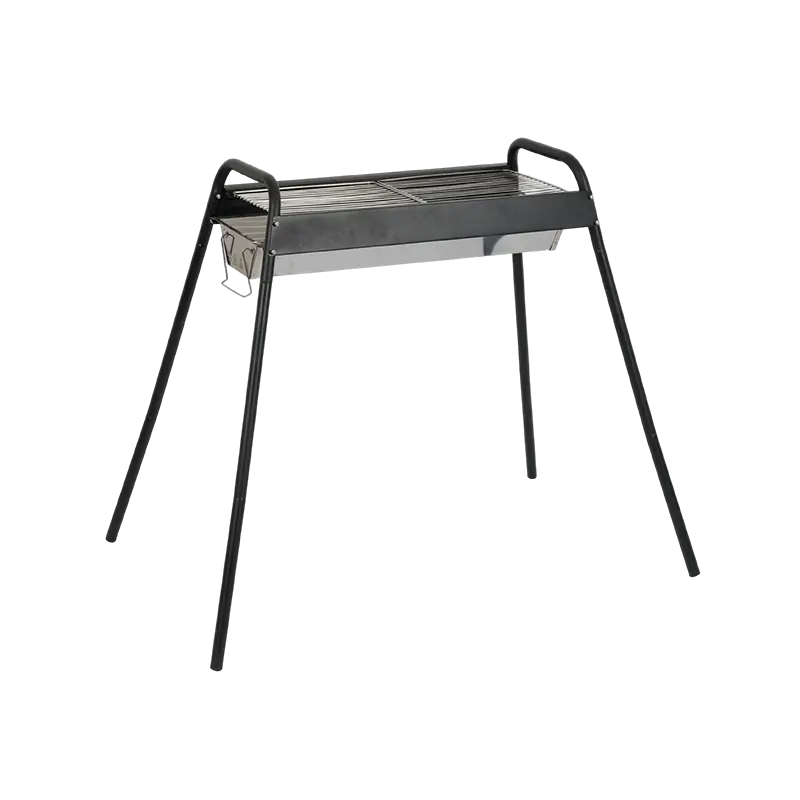 Outdoor Garden Portable Folding Charcoal Barbecue Grill
This portable, folding charcoal grill, designed specifically for outdoor BBQ enthusiasts, is perfect...

We are committed to integrity and quality, and we serve our customers with our professional oven manufacturing knowledge.
Phone: +86-13735628111
E-mail: [email protected]
Add: No.17 Ying Bin Road, Qing Xi Industry Zone, Xiang Zhu Town, Yongkang city,Zhenjiang province, China
Copyright © Yongkang Tongde Industry & Trade Co., Ltd. Rights
Reserved.

Outdoor BBQ Grill Manufacturer